
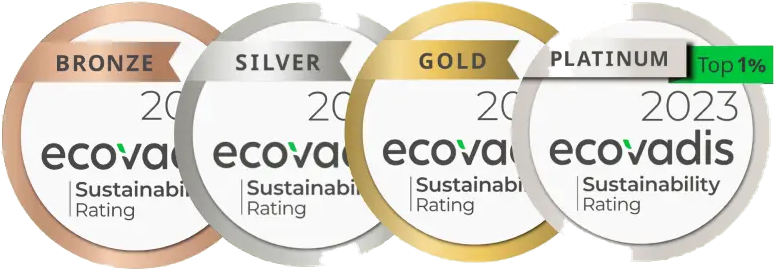
EcoVadis should add value to your business, not simply add to your workload.
Has a customer asked your business to complete an EcoVadis assessment?
EcoVadis assesses how a business manages sustainability across four themes: environment, labour and human rights, ethics, and sustainable procurement. Businesses complete a tailored questionnaire and provide supporting documents. The assessment produces a scorecard highlighting strengths and areas for improvement.
For many organisations, the request arrives with a deadline and little warning. Suddenly, multiple teams are being asked to find policies, gather evidence and answer questions they have never seen before.
Without preparation, the process can quickly become a time-consuming scramble. With the right approach, however, EcoVadis can become more than a customer requirement. At ENVOLV, we believe it should help demonstrate credible sustainability practices, strengthen customer relationships and identify improvements that create lasting business value.
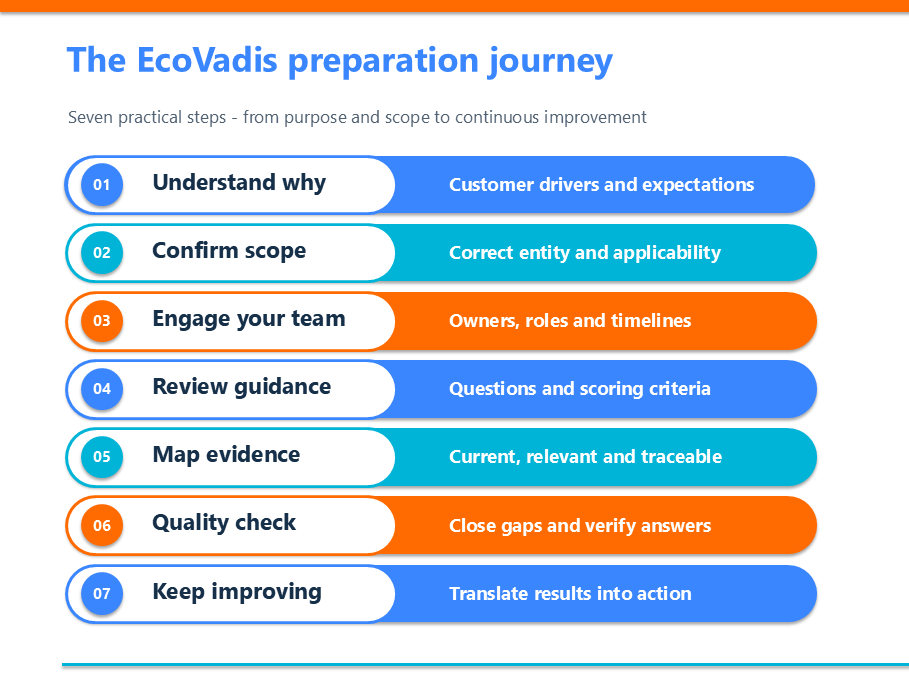
1. Understand why you are being assessed
Is the assessment a requirement from an existing customer, part of a tender process, or a way to demonstrate your sustainability credentials? Clarify the purpose and what success looks like before opening the questionnaire. Tip: do not open the questionnaire until you are fully prepared. Once open it you only get 30 business days to complete it.
For some suppliers, not completing a requested assessment, meeting customer expectations or responding to improvement actions may affect tender eligibility or approved supplier status. Consequences vary by customer, so clarify the requirements rather than making assumptions.
If you are aiming for a particular rating or medal, consider the resources needed to improve performance and maintain progress over time. The rating should be a measure of progress, not the only objective.
2. Get the assessment scope right
For a business with multiple legal entities or divisions, confirm precisely which organisation is registered for assessment. A Group-level policy may exist, but does it apply to the entity being assessed? Can you demonstrate that the commitments and practices are implemented there?
Checking scope early helps prevent wasted effort collecting documents that don't show what is happening in the relevant business. Group-level evidence may still be useful if you can demonstrate its applicability. For example, a Group sustainability policy may exist, but assessors are likely to look for evidence that it applies to the assessed entity and is supported by local implementation.
3. Make it a team effort
No single colleague is likely to hold all the evidence needed for an EcoVadis assessment. One person can coordinate the submission, but gathering evidence is a shared task. Colleagues from HR, procurement, HSEQ, operations and leadership may all need to contribute.
Explain what EcoVadis is, why it matters commercially, what each function needs to provide and when. Agree owners, milestones and review dates. Give people enough time to contribute alongside their existing responsibilities.
Where these activities are already on functional agendas, build on them. Avoid creating parallel processes purely for an assessment. For example if you complete investor reporting on an annual basis you will likely submit some of this information to them. Reuse that where possible.
4. Understand the questions before gathering evidence
Use the current EcoVadis guidance, question descriptions and scoring methodology. Check what each question asks and which evidence is appropriate before collecting documents. A policy may show commitment, while measures and results need different supporting information. Tip: use the Ecovadis help centre where you will find guides and webinars with advice. It requires time but understanding the requirements could mean the difference between a bronze and silver badge.
Requirements can change between assessments. For example, EcoVadis’s Q3 2026 methodology guidance introduced a requirement for quantitative targets under the Policy indicator to include a documented baseline year, alongside a target value and target year. Tip: check the latest guidance applicable to your questionnaire before submitting.
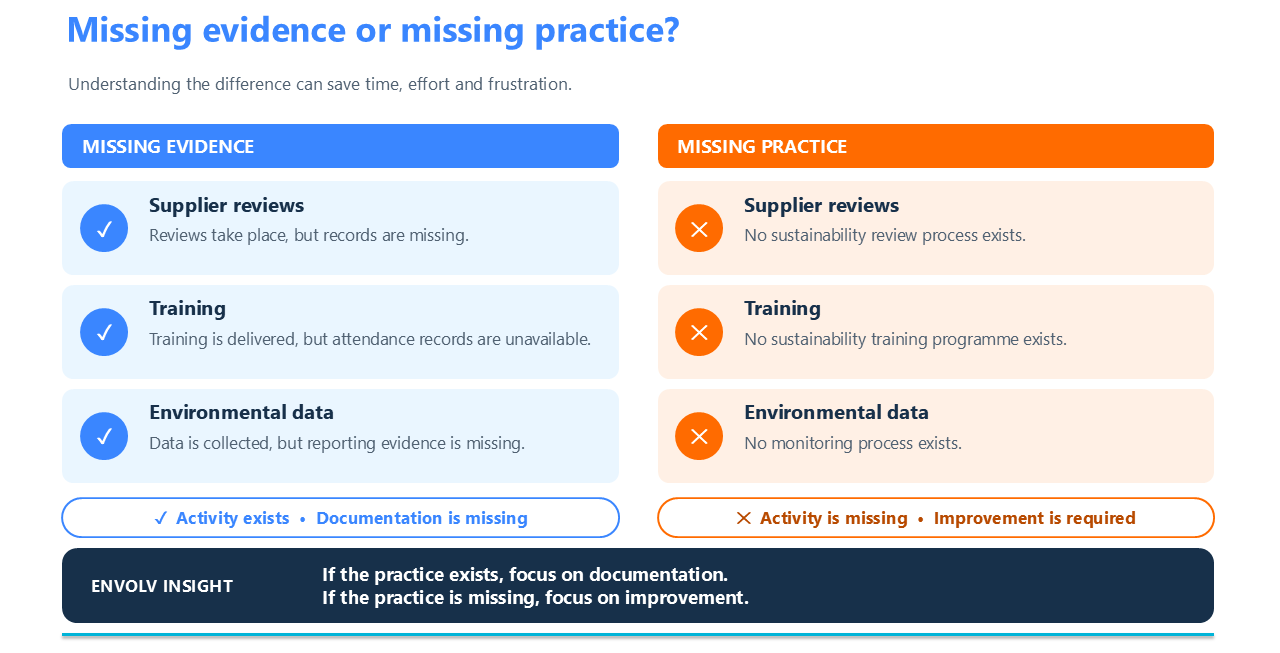
Before deciding what to gather or develop, ask whether the practice already exists but lacks supporting evidence, or whether the activity itself is missing. This distinction helps focus effort where it will make the greatest difference.
5. Get your evidence right
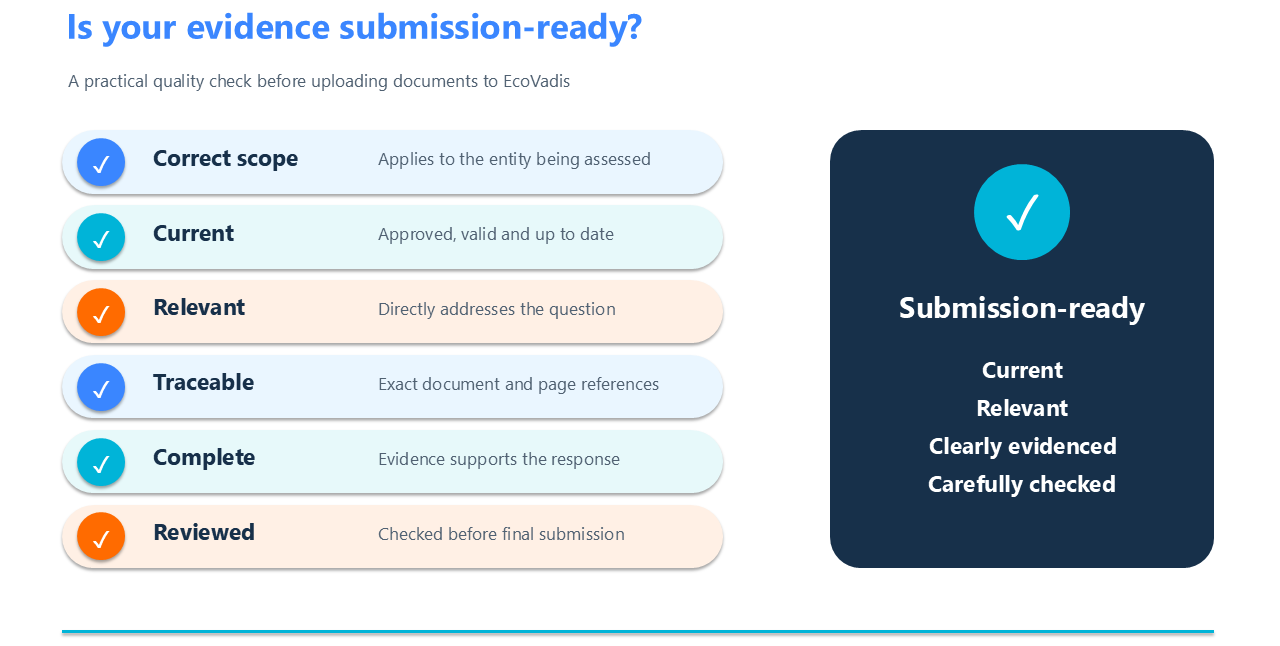
Even well-organised businesses can find document collection and referencing time-consuming. Check each document’s validity, scope and version to ensure it is current, relevant and supports the response. A simple mistake we see is documents that don’t meet the acceptance criteria or a 15 page report where the assessor needs to guess what part is the evidence. Tip: in the comments section for each question use accurate file names, page or section references and concise explanations to link the evidence to each question.
For performance reporting, check that metrics address the relevant topics, reporting periods and organisational scope. EcoVadis’s Q3 2026 methodology guidance reorganised reporting questions around material topics and introduced standardised metrics aligned with international reporting frameworks. Having data available does not necessarily mean it meets the question’s requirements.
Remember, do not assume the relevance of a document will be obvious to an assessor. Make the evidence easy to locate and verify.
What good evidence looks like
For example:
An environmental policy may demonstrate commitment. It needs to be branded, dated and signed off.
Training records or supplier assessments may demonstrate implementation. Again they need be dated and show the period of time they cover.
Energy, waste or emissions data may demonstrate results. The reporting timeframe, what was in scope, out of scope and the collection methodology must be included in the document.
Together, these help demonstrate commitment, implementation and results, rather than relying on a policy alone.
Important: Avoid creating documents just for the assessment, especially policies. Use accurate data. Vague or misleading information will not be accepted and this can lead to reputational damage.
6. Review, challenge and address gaps
Build quality assurance into the timetable. The date contributors provide evidence should not be the submission deadline. Leave time to review responses, follow up missing information, correct references and check uploads. Ensure the right person is signing off your submission, aligned to your governance framework. That may take a little time too. And remember you have 30 business days to complete your submission from when you open the questionnaire.
Some gaps have relatively straightforward remedies: locating existing records, clarifying how a document applies, consolidating training attendance information or documenting established practices. Updating an expired policy, however, should involve a genuine review and appropriate approval, not just a change of date.
Other gaps require actual changes to the way the business operates. A second pair of eyes can help spot both kinds of issues before submission.
Tip: identify and action quick wins prior to submission. Where bigger changes are required it is worth accepting these are improvements to make during the year leading up to your reassessment. Ecovadis is a journey and no one jumps straight to Platinum in year one.
7. Use the results to drive continuous improvement
Do not let the work end at submission. Review the scorecard, recognise strengths and turn improvement areas into actions with clear owners and realistic deadlines. Where possible, integrate those actions into existing functional plans and performance monitoring.
Treating EcoVadis as part of an ongoing management process, rather than a once-a-year exercise, can make future assessments more manageable and strengthen sustainability performance over time.
Important: listen to and share customer feedback that you receive on the platform and other interactions. Customers may set you targets. Not meeting those targets can cost you a contract. We have seen a business lose a contract because it did not raise its score to the level its customer required of preferred suppliers.
Make EcoVadis work for your business
A successful assessment is about more than achieving a rating. It is an opportunity to demonstrate credible practices, understand where improvements are needed and develop the capability to sustain them.
At ENVOLV, we provide practical, tailored support to help businesses prepare for EcoVadis with confidence. Whether you need a gap analysis to understand what to improve before you submit or you need help managing the whole submission processed from start to finish, we can help focus effort where it delivers the greatest value.
Preparing for your first submission or looking to strengthen your next assessment? Get in touch to discuss how we can help you prepare, review your evidence and plan improvements.